



Complete Guide to Enterprise Resource Planning(ERP)
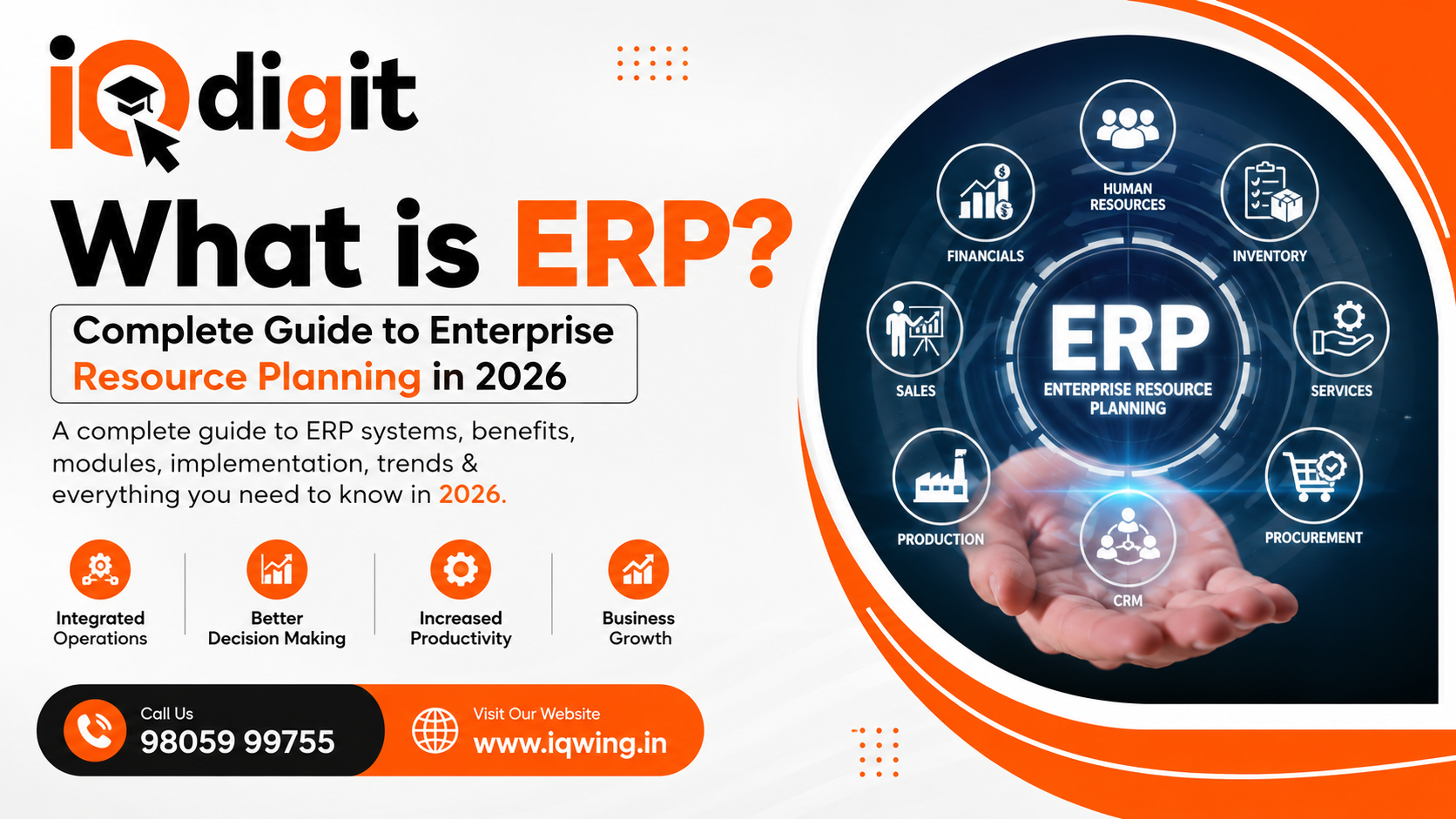
Complete Guide to Enterprise Resource Planning
ERP (Enterprise Resource Planning) is a business management software that integrates departments such as finance, HR, sales, inventory, procurement, manufacturing, and operations into a single centralized system. ERP helps organizations streamline processes, improve efficiency, reduce costs, and make data-driven decisions using real-time information.
What is ERP?
ERP stands for Enterprise Resource Planning. It is an integrated software solution designed to manage and automate core business processes across an organization.
Instead of using separate tools for accounting, inventory, HR, sales, procurement, and operations, ERP combines everything into one unified platform.
How Does ERP Work?
ERP software acts as a central database where all departments share information in real time.
Example
When a sales order is created:
Inventory is automatically updated.
Finance receives billing information.
Procurement gets stock alerts.
Management sees updated reports instantly.
This eliminates duplicate data entry and improves accuracy.
Why Is ERP Important?
Modern businesses generate vast amounts of data daily.
Without ERP:
Information remains scattered.
Departments work in silos.
Reporting becomes difficult.
Errors increase.
With ERP:
Teams collaborate effectively.
Operations become streamlined.
Decision-making improves.
Productivity increases.
Benefits of ERP
1. Improved Efficiency
Automation reduces manual tasks and repetitive work.
2. Real-Time Visibility
Managers gain instant access to business performance data.
3. Better Decision-Making
Accurate analytics help leaders make informed decisions.
4. Cost Reduction
ERP minimizes operational inefficiencies and unnecessary expenses.
5. Enhanced Customer Service
Quick access to customer information improves response times.
6. Data Security
Centralized systems provide better access control and compliance management.
ERP Modules Explained
Finance Module
Manages:
Accounts payable
Accounts receivable
General ledger
Tax reporting
Inventory Module
Helps track:
Stock levels
Warehouse movement
Product availability
HR Module
Supports:
Employee management
Attendance tracking
Payroll processing
Sales Module
Handles:
Leads
Quotations
Orders
Revenue tracking
Procurement Module
Controls:
Vendor management
Purchase orders
Supplier performance
Industries That Use ERP
ERP systems are widely used across industries including:
Education
Schools and colleges use ERP for:
Student management
Attendance
Fee collection
Examination management
Manufacturing
Production planning
Inventory control
Supply chain management
Healthcare
Patient records
Billing
Staff management
Retail
Stock management
Sales tracking
Customer insights
Logistics
Fleet management
Shipment tracking
Warehouse operations
How to Choose the Right ERP
Consider the following factors:
Business Size
Select ERP software that matches your organization's scale.
Industry Requirements
Choose industry-specific ERP solutions whenever possible.
Scalability
Ensure the ERP can grow with your business.
Integration
Verify compatibility with existing software.
User Experience
A simple interface improves adoption.
Support Services
Reliable customer support is critical for success.
Frequently Asked Questions
What is ERP in simple words?
ERP is software that helps businesses manage all major operations from one platform.
What does ERP stand for?
ERP stands for Enterprise Resource Planning.
Why do companies use ERP?
Companies use ERP to improve efficiency, reduce costs, and gain better visibility into operations.
Is ERP suitable for small businesses?
Yes. Modern cloud ERP solutions are designed for businesses of all sizes.
What are ERP modules?
ERP modules are specialized components such as finance, HR, inventory, sales, and procurement.
How long does ERP implementation take?
Implementation can take anywhere from a few weeks to several months depending on complexity.
What is cloud ERP?
Cloud ERP is hosted online and accessed through the internet rather than local servers.
Can ERP improve productivity?
Yes. Automation and centralized data significantly improve productivity.
What industries benefit from ERP?
Manufacturing, education, healthcare, retail, logistics, and service industries all benefit from ERP.
Is ERP secure?
Modern ERP platforms include advanced security controls, user permissions, and encryption.
Like what you read?
Let's talk about your next digital project.